Fleeting splash image
Context
Fleeting gives truck owners and truck drivers access to the benefits of digital transformation in the transportation logistics industry
Role
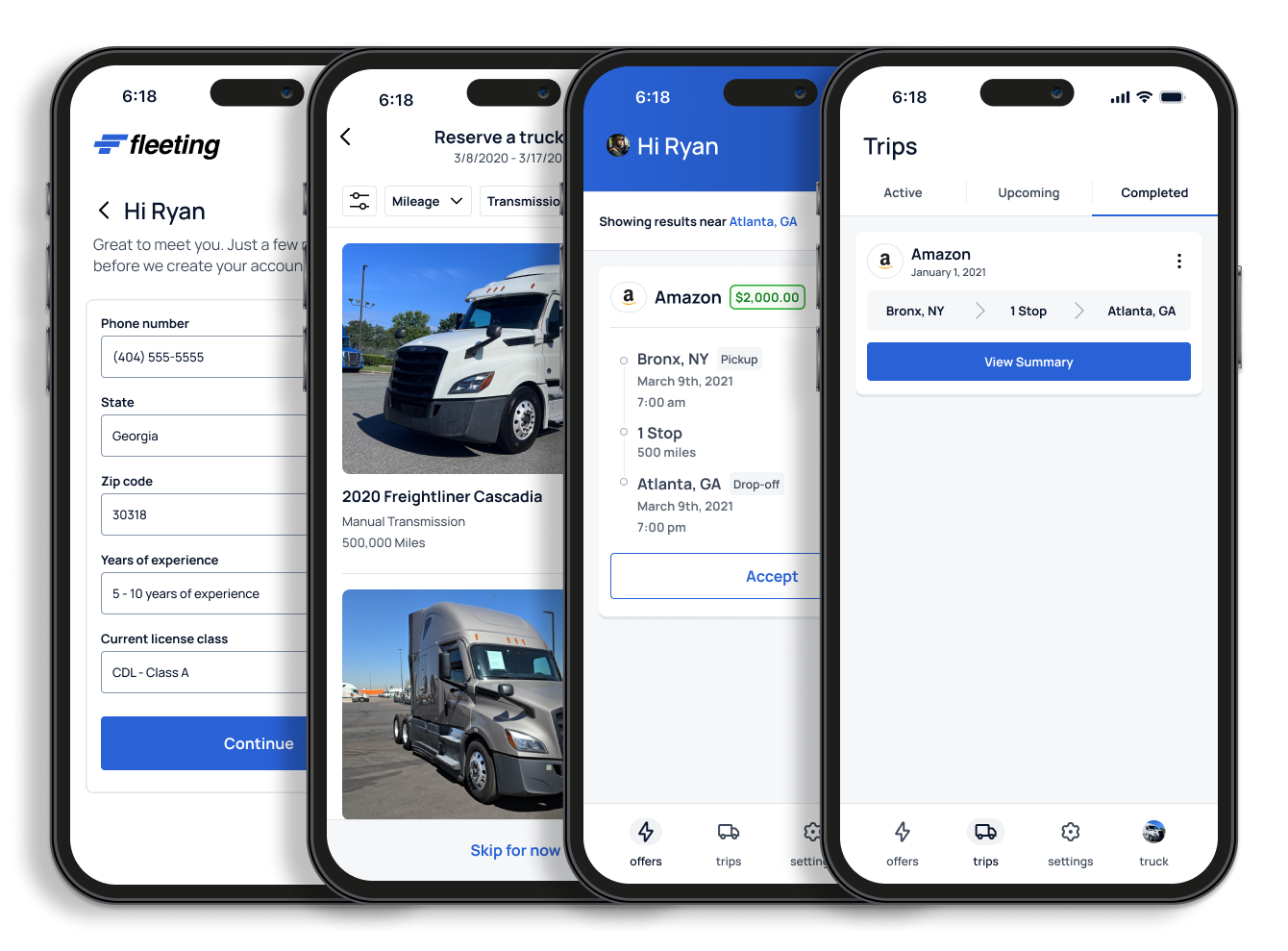
I worked as a solo Product Designer - collaborating closely with engineers, subject matter experts, and operators to create a product MVP that would allow truck drivers to view offers and book trips within one app.
Highlights
We created an ecosystem with 40+ trucks and connected them with drivers and loads, daily during the Covid19 pandemic.
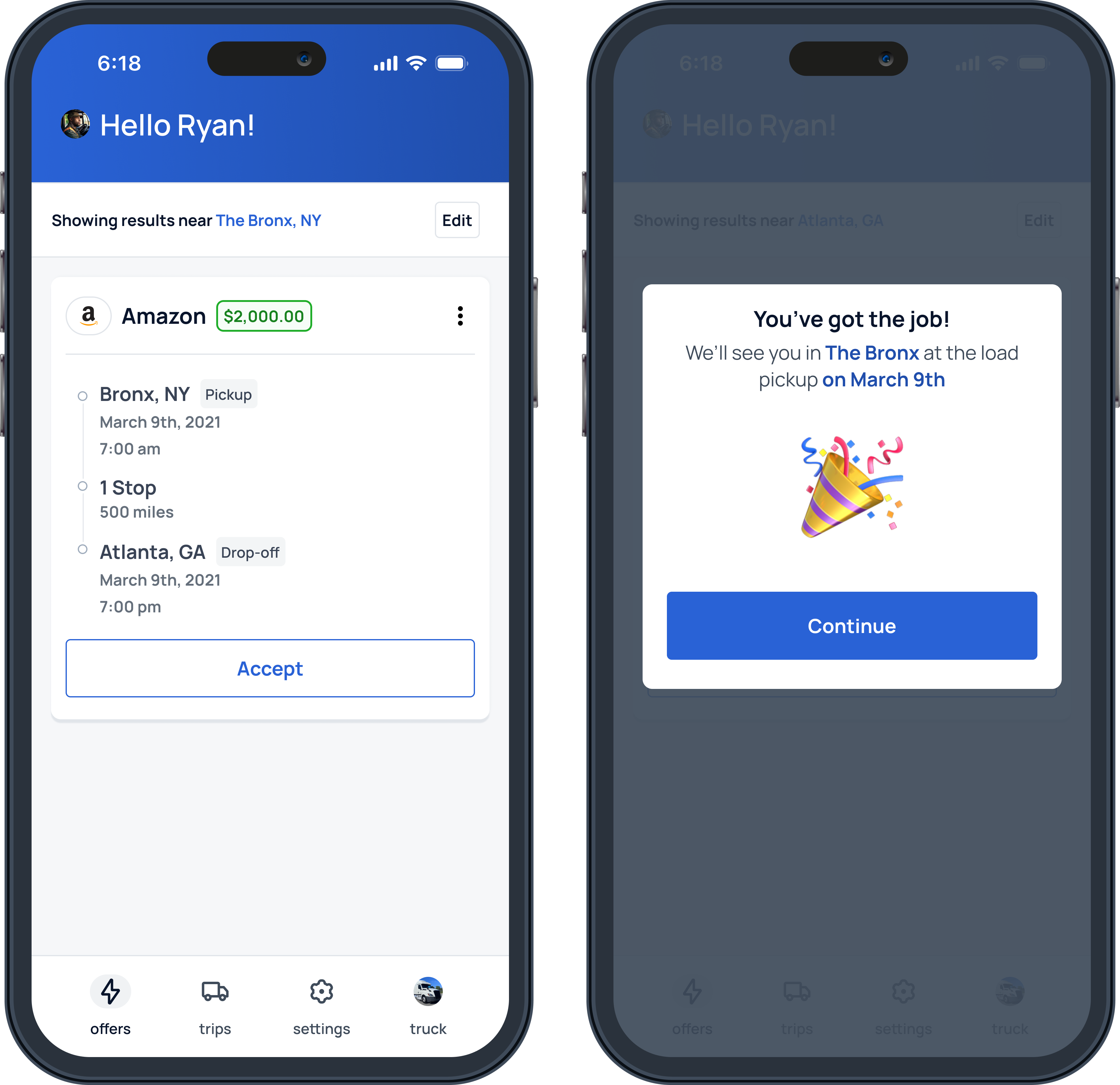
Fleeting empowers drivers to choose offers aligned with their desired rates, routes, and carrier relationships.
Fleeting, job accepted.
Fleeting evolution timeline
Timeline
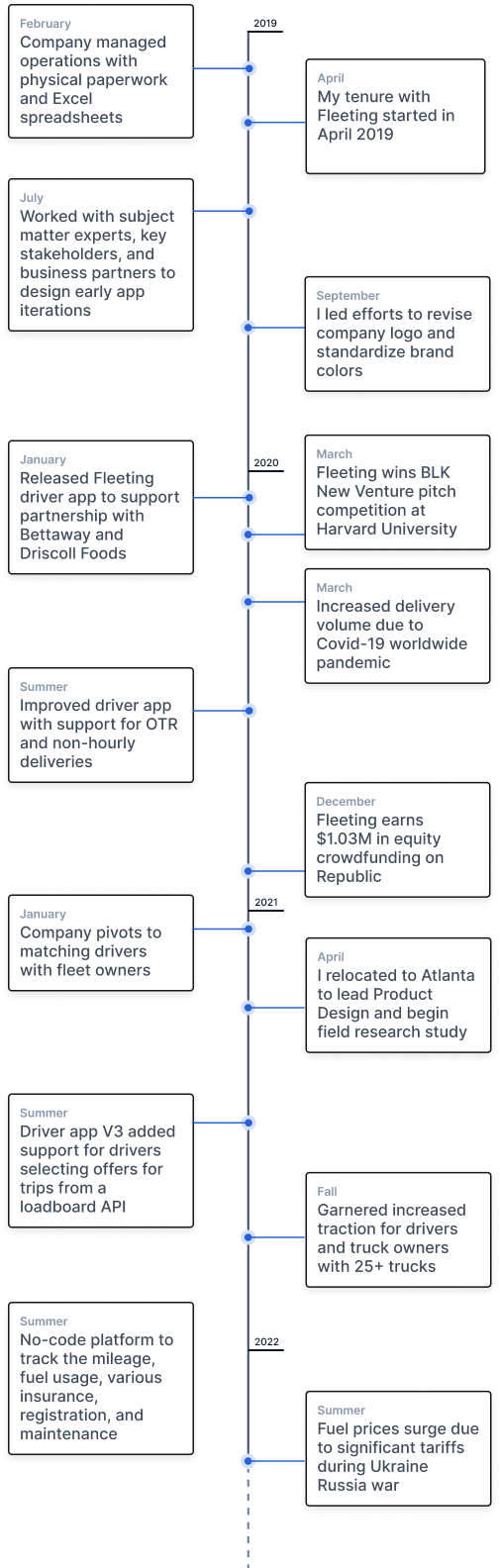
Diagram illustrates the various releases, internal and external factors that affected development of the Fleeting ecosystem.
Foundations
I set out to create a dashboard that gave truck owners visibility and autonomy in their careers and ended up creating the foundation for a brand that had potential to garne major traction. I started out with a simple brand mark that would be used on the company's marketing materials and ended up pushing that into a system with established product primatives and logos and typography standards.
Fleeting logo on light backgroundFleeting logo on dark backgroundFleeting color ramp.
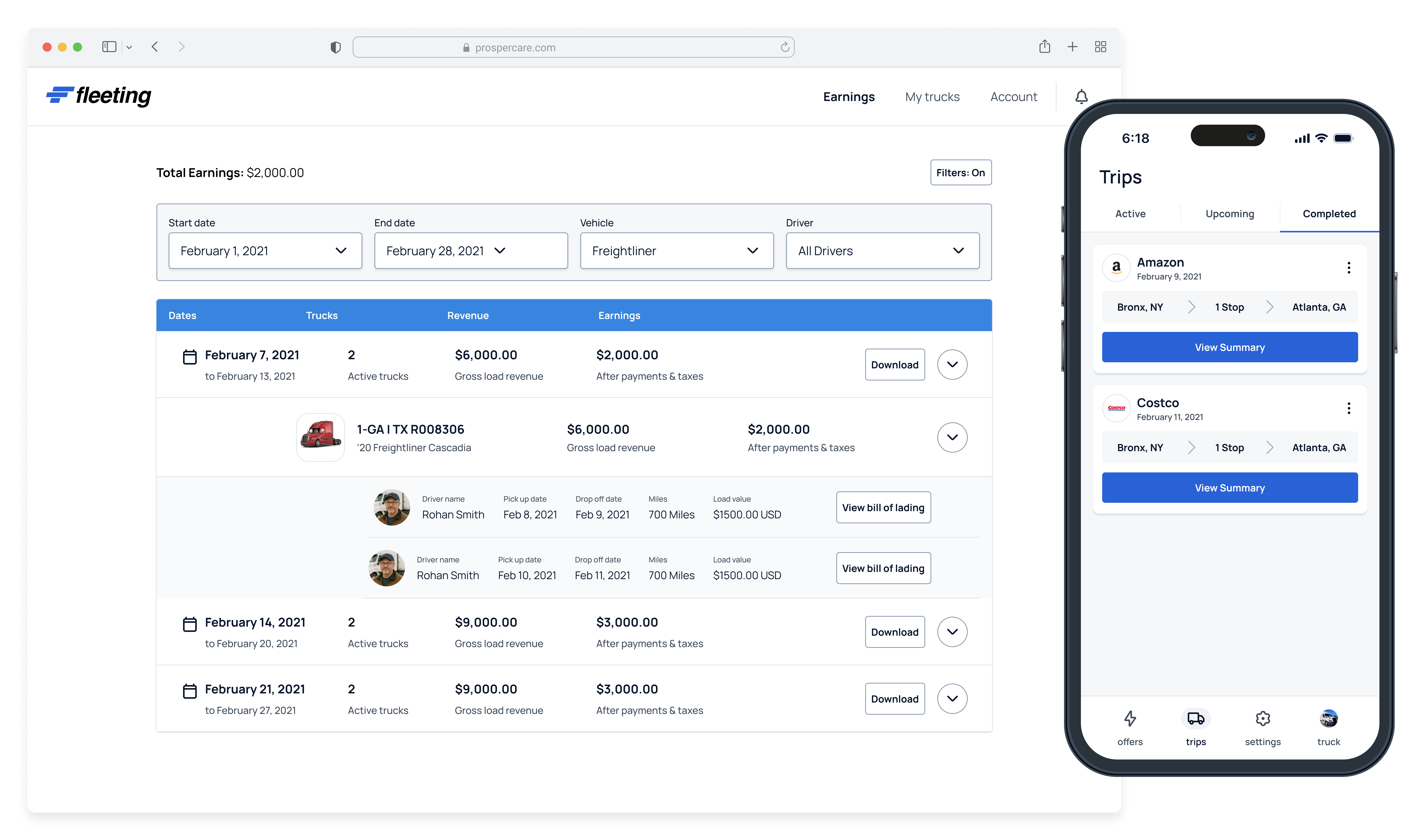
Proposal for Fleeting Dashboard
Next Steps
By 2022, we had built meaningful traction — trucks were on the road, and drivers were regularly claiming loads. However, two major challenges ultimately derailed the business: a spike in fuel costs driven by the Russia–Ukraine war, and the lack of a reliable, scalable approach to truck maintenance.

The company's initial goal was to create a dashboard that gave truck owners visibility into who was driving their vehicles and how much they were earning. As maintenance issues grew, our focus shifted toward tracking repair statuses and estimating downtime — a pivot that came too late to prevent operational strain.

Looking back, one key recommendation I’d offer isn’t tied to UI at all, but to real-world user experience: implement a process where drivers are required to drop off trucks with a maintenance specialist after every trip. While this would have introduced upfront costs, it could have built lasting trust between owners and drivers — and possibly extended the life of the business.